PoE Switch Price in Kenya
PoE Switch Kenya guide for 2026. Compare 8, 16, 24 and 48-port PoE switches, prices, PoE budgets, brands and the best options for CCTV and Wi-Fi
PoE Switch Price in Kenya
PoE Switch Kenya: 2026 Prices, Types & Buying Guide
PoE Switch Kenya: 2026 Prices, Types & Buying Guide
A PoE Switch Kenya solution is one of the most useful pieces of networking equipment when you need to connect and power devices such as IP cameras, wireless access points, VoIP phones, intercom systems and other compatible network equipment using a single Ethernet cable.
PoE stands for Power over Ethernet. Instead of running one cable for network data and another cable for electricity, a compatible PoE switch can deliver both through Ethernet cabling. This simplifies installation, reduces the number of power adapters required around a building and makes it easier to centralise network equipment inside a cabinet or server room.
PoE switches are now widely used across Kenya in CCTV installations, office networks, hotels, schools, apartments, warehouses, hospitals, businesses and ISP projects. However, not every PoE switch provides the same number of powered ports, PoE standard, power budget, Ethernet speed or management functionality. Choosing the correct switch therefore requires more than simply counting the number of ports.
This complete PoE Switch Kenya guide explains the different PoE standards, prices, 8-port, 16-port, 24-port and 48-port options, popular brands and the specifications you should check before buying.
What Is a PoE Switch?
A PoE switch is a network switch capable of providing electrical power to compatible devices through Ethernet cabling while also carrying network data.
A typical installation may look like this:
Internet → Router → PoE Switch → Access Points / CCTV Cameras / IP Phones
The PoE switch connects devices to the local network while simultaneously providing power.
This is particularly useful when devices are installed in locations where electrical sockets are inconvenient or unavailable.
Examples include:
Ceiling-mounted wireless access points
Outdoor CCTV cameras
IP phones
Building intercom systems
Access-control devices
Outdoor wireless radios
Selected IoT devices
The powered device must support a compatible PoE standard.
How Does a PoE Switch Work?
A standards-based PoE switch detects whether a connected device supports compatible PoE before supplying power.
This allows Ethernet cabling to perform two jobs:
Carry network data.
Deliver electrical power.
Depending on the switch and powered device, common PoE standards include:
IEEE 802.3af
IEEE 802.3at
IEEE 802.3bt
The correct standard matters because different devices require different amounts of power.
A basic IP phone may require relatively little power, while a high-performance Wi-Fi access point or motorised PTZ camera may require considerably more.
PoE vs PoE+ vs PoE++
Not all PoE switches provide the same power capability.
StandardCommon NameTypical UseIEEE 802.3afPoEBasic cameras, phones and APsIEEE 802.3atPoE+Higher-power cameras and wireless APsIEEE 802.3btPoE++High-power APs, PTZ cameras and advanced devicesPoE+ equipment is extremely common in modern business networks.
TP-Link, for example, currently lists models such as the TL-SG1005P with IEEE 802.3af/at support, while higher-end products such as the SG3428XPP-M2 extend into PoE++ and multi-Gigabit networking.
The important point is that PoE compatibility should always be checked using the exact switch and powered-device specifications.
Why Use a PoE Switch in Kenya?
PoE provides several practical advantages.
Simpler Installation
Instead of installing electrical sockets beside every camera or access point, compatible devices can receive power through Ethernet cables running back to the network cabinet.
Centralised Power
A UPS can protect the PoE switch.
If power fails, cameras, access points and phones connected to the switch may continue operating as long as the UPS remains active.
Cleaner Installations
Fewer local power adapters can make installations neater.
This is particularly useful in:
Hotels
Offices
Schools
CCTV installations
Retail shops
Apartment buildings
Easier Maintenance
Power to a device can sometimes be restarted from the network switch rather than physically accessing the device.
Flexible Device Placement
Access points and cameras can be installed where they provide the best coverage or view rather than being positioned only near electrical sockets.
PoE Switch Prices in Kenya
PoE switch prices in Kenya vary widely.
The price depends on:
Brand
Number of ports
Number of PoE ports
PoE standard
PoE power budget
Managed or unmanaged design
Ethernet speed
SFP/SFP+ uplinks
Layer 2 or Layer 3 functionality
Rack-mount capability
Warranty
Stock availability
Current Kenyan listings illustrate this difference.
Tawa currently lists the D-Link DGS-F1010P-E 8-Port PoE Switch at KES 9,000 and the D-Link DGS-1210-28P 28-Port Gigabit PoE Switch at KES 35,000.
Orbitlink Solutions currently lists the Ubiquiti USW-Lite-8-PoE at KES 25,000, with eight Gigabit Ethernet ports, four PoE+ ports and a stated 52W PoE budget.
These examples demonstrate why comparing PoE switches purely by port count is misleading.
What Is a PoE Budget?
The PoE budget is one of the most important specifications on any PoE switch.
It tells you how much total electrical power the switch can provide to connected PoE devices.
For example, imagine a switch has:
8 PoE ports
60W total PoE budget
If eight connected devices each require 10W, the total possible requirement would be:
8 × 10W = 80W
That would exceed a 60W switch budget.
The switch may have enough physical ports but not enough power for all devices operating at maximum requirement.
Therefore, always calculate:
Total expected powered-device requirement < switch PoE budget
Ideally, leave additional headroom.
Port Power vs Total PoE Budget
Another common mistake is confusing per-port maximum power with total available power.
A switch may support up to 30W on an individual PoE+ port.
That does not necessarily mean every port can provide 30W simultaneously.
For example:
24 PoE ports × 30W = 720W.
If the switch only has a 250W total PoE budget, all 24 ports cannot simultaneously deliver 30W each.
This distinction becomes especially important for:
High-performance Wi-Fi access points
PTZ cameras
Outdoor wireless devices
Multi-radio access points
Other high-power equipment
8-Port PoE Switch Kenya
An 8-port PoE switch is a popular option for small installations.
Typical uses include:
Small CCTV systems
Small offices
Shops
Restaurants
Home networks
Small Wi-Fi installations
An 8-port model may power several cameras or access points while using another port for the uplink to the router.
However, check how many ports actually provide PoE.
An 8-port switch does not automatically mean eight PoE-enabled ports.
For example, Orbitlink Solutions currently lists the Ubiquiti USW-Lite-8-PoE with eight Gigabit ports, but only four support PoE+.
This makes exact-model specifications important.
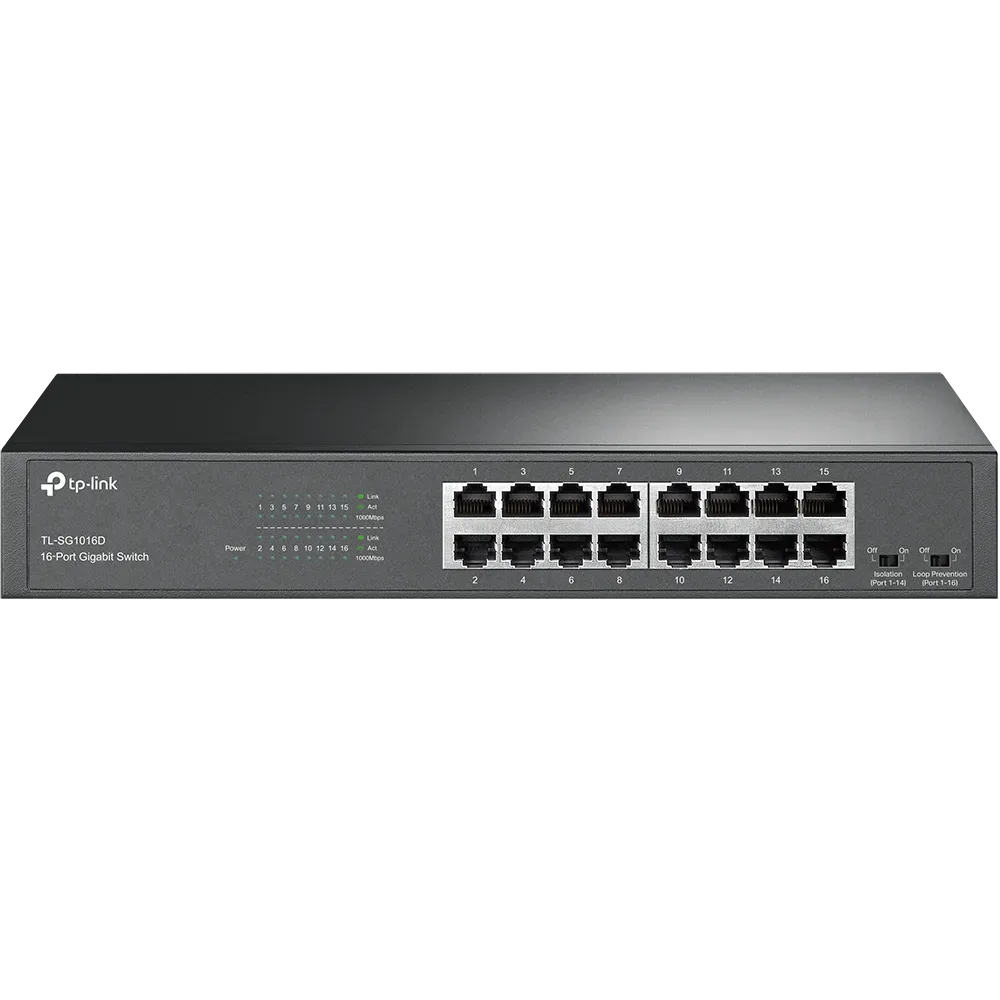
16-Port PoE Switch Kenya
A 16-port PoE switch is useful for medium-sized installations.
Applications include:
Office networks
CCTV systems
School networks
Apartment installations
Restaurants
Hotels
Access-point deployments
A 16-port switch offers additional capacity compared with smaller desktop switches.
Before buying, confirm:
Number of PoE-enabled ports
PoE power budget
Gigabit support
Managed or unmanaged operation
Uplink ports
For a growing network, leaving spare ports is normally advisable.
24-Port PoE Switch Kenya
A 24-port PoE switch is one of the most widely used configurations in professional networking.
It works well in:
Offices
Hotels
Schools
Hospitals
CCTV systems
Apartment networks
Business Wi-Fi
Enterprise access networks
Many 24-port PoE switches use a standard rack-mount form factor.
Depending on the model, they may include:
Gigabit Ethernet
PoE+
VLAN management
SFP uplinks
SFP+ uplinks
Link aggregation
Layer 3 functionality
Network monitoring
However, even 24-port switches vary substantially.
For example, Ubiquiti's current Standard 24 PoE provides 24 Gigabit RJ45 interfaces but only 16 PoE+ ports, with a 95W total PoE budget.
By comparison, Ubiquiti's higher-end Pro Max 24 PoE provides substantially greater PoE capacity, 2.5GbE interfaces and 10G SFP+ uplinks, with a published 400W PoE budget.
This is why two 24-port PoE switches can have dramatically different prices.
48-Port PoE Switch Kenya
A 48-port PoE switch is suitable for high-density deployments.
Common environments include:
Large businesses
Universities
Hospitals
Hotels
Enterprise CCTV
Large schools
Campus networks
Data centres
A 48-port PoE switch can connect a large number of endpoints from one rack-mounted device.
However, the power budget becomes particularly important.
If dozens of devices need power simultaneously, calculate the expected load carefully.
Larger installations should also consider whether a single 48-port device creates too much dependency on one piece of equipment.
In some networks, several smaller switches may provide better physical distribution or redundancy.
Gigabit PoE Switch Kenya
Most modern PoE installations should strongly consider Gigabit Ethernet.
A Gigabit PoE switch supports data rates of up to 1Gbps per compatible Ethernet connection.
Gigabit is appropriate for:
Wi-Fi access points
High-resolution IP cameras
Office computers
Servers
NAS systems
Fibre internet
Starlink
Business networks
Older 100 Mbps PoE switches can still work for some CCTV applications, but they may become restrictive as network requirements increase.
Multi-Gigabit PoE Switches
Modern Wi-Fi networks are creating demand for speeds greater than 1Gbps.
Wi-Fi 6E and Wi-Fi 7 access points can benefit from:
2.5GbE
5GbE
10GbE uplinks
For example, TP-Link's SG3428XPP-M2 is currently specified with 2.5 Gigabit PoE ports and 10G SFP+ uplinks.
Ubiquiti's Pro Max 24 PoE also combines 1GbE, 2.5GbE and 10G SFP+ connectivity.
For new high-performance wireless networks, buying only 1Gbps switching may unnecessarily restrict access-point capacity.
Managed PoE Switch Kenya
A managed PoE switch allows administrators to control and monitor network operation.
Common features may include:
VLANs
Quality of Service
Port isolation
Spanning Tree
Link aggregation
SNMP
Port monitoring
Traffic statistics
Access controls
Managed switches are highly useful for professional networks.
For example, an office could separate:
Management devices
Staff devices
Guest Wi-Fi
CCTV
VoIP phones
using different VLANs.
This provides better organisation and network control.
Unmanaged PoE Switch Kenya
An unmanaged PoE switch is simpler.
It normally requires little or no configuration.
You connect:
Router → PoE Switch → Devices
and the switch begins working.
Unmanaged PoE switches are suitable for basic installations such as:
Small CCTV systems
Shops
Homes
Small offices
They are generally cheaper and easier to deploy than managed switches.
However, they usually lack advanced VLAN and monitoring features.
PoE Switch for CCTV in Kenya
CCTV is one of the largest use cases for PoE switches.
A typical IP camera system may contain:
PoE cameras
PoE switch
Network Video Recorder
Router
Monitor
Internet connection
The PoE switch powers the cameras while carrying video data back to the NVR.
Example CCTV Installation
Internet/Router
↓
PoE Switch
↓
8 IP Cameras
↓
NVR
The switch must provide enough:
PoE ports
PoE power
Ethernet bandwidth
Uplink capacity
for the entire installation.
How Many Cameras Can a PoE Switch Support?
This depends on:
Number of PoE ports
Camera power consumption
PoE budget
Camera bitrate
Uplink speed
For example, an 8-port switch with eight PoE-enabled ports could potentially connect eight cameras.
However, if those cameras require more total power than the switch can provide, fewer may be usable.
Always calculate both:
Port requirement
and
Power requirement.
PoE Switch for Wi-Fi Access Points
PoE switches are also widely used to power ceiling-mounted wireless access points.
Popular examples include access points from:
Ubiquiti UniFi
TP-Link Omada
MikroTik
Grandstream
Ruijie
A typical business Wi-Fi network might use:
Router / Firewall → Managed PoE Switch → Multiple Access Points
This makes installation cleaner because electrical outlets are not needed beside every access point.
PoE Switch for Wi-Fi 6 and Wi-Fi 7
Newer access points can require more power and higher Ethernet speeds.
When deploying Wi-Fi 6, Wi-Fi 6E or Wi-Fi 7 equipment, check:
PoE requirement
Port speed
Total PoE budget
Uplink bandwidth
Some high-performance APs can benefit from PoE++ and 2.5GbE connectivity.
Buying a basic Fast Ethernet PoE switch for a modern Wi-Fi 7 network could severely restrict performance.
PoE Switch for VoIP Phones
VoIP phones are another common PoE application.
Instead of giving each desk phone a separate power adapter, compatible phones can receive power through the Ethernet cable.
This provides a cleaner installation and makes backup power easier.
If the network switch is protected by a UPS, compatible phones can remain powered during short electricity interruptions.
PoE Switch for Hotels
Hotels often require numerous PoE-powered devices.
These can include:
Access points
IP phones
CCTV cameras
Intercoms
Access-control equipment
Managed PoE switches are normally useful because hotel networks may need separate VLANs for:
Guests
Staff
Management
CCTV
VoIP
A hotel should also calculate PoE budget carefully because dozens of access points and cameras can create substantial power demand.
PoE Switch for Schools
Schools and universities can use PoE switches for:
Wireless access points
IP cameras
IP phones
Computer labs
Administrative offices
Managed switching allows network administrators to separate departments or user groups using VLANs.
Large campuses may also use fibre uplinks to connect switches between buildings.
PoE Switch for Offices
Business offices commonly use PoE for:
Wi-Fi
IP phones
CCTV
Door-access systems
A medium-sized office might use:
ISP Connection → Firewall → 24-Port Managed PoE Switch → PCs + Phones + APs + CCTV
This provides a central network architecture that can be easier to manage and troubleshoot.
TP-Link PoE Switches in Kenya
TP-Link provides PoE products ranging from compact desktop switches to managed enterprise-class Omada models.
Current product categories include:
5-port PoE switches
8-port PoE switches
16-port PoE switches
24-port PoE switches
48-port PoE switches
Smart switches
JetStream managed switches
Omada switches
Multi-Gigabit PoE++ switches
Current TP-Link examples include the TL-SG1005P family for smaller networks and higher-capacity multi-Gigabit Omada models for demanding business installations.
You can explore more networking options through Orbitlink Solutions.
Ubiquiti PoE Switches in Kenya
Ubiquiti PoE switches are commonly used in UniFi installations.
Their portfolio currently includes switch families such as:
Lite
Ultra
Standard
Professional
Pro Max
The capabilities vary considerably.
For example, the currently listed USW-Lite-8-PoE has eight Gigabit ports, four PoE+ ports and a 52W PoE budget.
Higher-end models add features such as:
PoE++
2.5GbE
10G SFP+
Layer 3 capabilities
Larger power budgets
Orbitlink Solutions currently lists Ubiquiti PoE switching products for Kenya.
D-Link PoE Switches in Kenya
D-Link provides both basic and managed PoE switching equipment.
Current Kenyan listings include:
D-Link DGS-F1010P-E 8-Port PoE Switch — KES 9,000
D-Link DGS-1210-28P 28-Port Gigabit PoE Switch — KES 35,000
These prices were visible on Tawa when checked in September 2026 and can change with stock availability.
Visit Tawa for current networking products and availability.
MikroTik PoE Switching
MikroTik also provides networking equipment with PoE capabilities in selected models.
The current Tawa switch category, for example, lists the MikroTik RB260GSP PoE switch, although it was shown as out of stock when checked.
MikroTik products are widely used in:
ISP networks
Wireless networks
Enterprise installations
Router and switch environments
For specialised MikroTik networking equipment, visit MikroTik Kenya.
Active PoE vs Passive PoE
This distinction is extremely important.
Standard IEEE PoE normally involves negotiation or detection before compatible power is supplied.
Passive PoE can apply voltage without the same standards-based detection process.
Connecting incompatible passive PoE equipment can damage devices.
Before connecting passive PoE devices, verify:
Voltage
Polarity
Pin configuration
Device support
Never assume that every device labelled “PoE” is electrically compatible with every PoE switch.
Do You Need SFP or SFP+ Uplinks?
Larger networks should consider uplink capacity.
Some switches provide:
SFP — commonly used for Gigabit fibre
SFP+ — commonly used for 10 Gigabit fibre
These interfaces can connect:
Switch to switch
Switch to router
Different floors
Different buildings
Core and access switches
For networks containing many cameras or access points, higher-capacity uplinks can prevent congestion.
PoE Switch vs PoE Injector
A PoE injector adds PoE power to one Ethernet connection.
A PoE switch provides networking and PoE across multiple ports.
PoE Injector Is Useful When:
Only one device requires PoE
An existing switch does not support PoE
A small point-to-point wireless installation needs power
PoE Switch Is Better When:
Several devices need PoE
You want centralised power
You need a cleaner network rack
You expect future expansion
For multiple devices, a PoE switch is often the more manageable solution.
PoE Switch vs Normal Network Switch
The biggest difference is power delivery.
A standard network switch provides:
Data only
A PoE switch provides:
Data + electrical power
However, many PoE switches can also connect normal non-PoE Ethernet devices.
For example, the same switch may connect:
PoE access point
PoE camera
Desktop computer
Printer
NVR
provided the configuration and specifications allow it.
How to Choose the Best PoE Switch in Kenya
Before buying, answer these questions.
1. How Many Devices Need PoE?
Count the cameras, access points, phones and other powered devices.
2. How Much Power Does Each Device Need?
Check each device's official maximum power requirement.
3. What Is the Total PoE Budget?
Add the device requirements together and leave reasonable headroom.
4. What PoE Standard Is Required?
Confirm whether devices require:
PoE
PoE+
PoE++
5. What Ethernet Speed Do You Need?
Choose between:
Fast Ethernet
Gigabit
2.5GbE
Higher-speed Ethernet
depending on the project.
6. Do You Need VLANs?
If yes, choose an appropriate managed switch.
7. Do You Need Fibre?
Look for SFP or SFP+ uplinks.
8. Will the Switch Go in a Rack?
For professional installations, rack-mountable models can provide cleaner structured cabling.
Common PoE Switch Buying Mistakes
Avoid these common errors:
Choosing by port count alone
Ignoring total PoE budget
Mixing incompatible PoE standards
Buying 100 Mbps equipment for high-speed networks
Forgetting uplink requirements
Not leaving expansion capacity
Assuming every port provides PoE
Confusing passive PoE with IEEE standards-based PoE
Buying without checking device requirements
These mistakes can lead to unstable devices, poor performance or unnecessary replacement costs.
Where to Buy a PoE Switch in Kenya
When comparing suppliers, check:
Exact model number
PoE standard
Number of PoE ports
Total PoE budget
Ethernet speed
SFP/SFP+ interfaces
Management features
Warranty
Stock
Technical support
At Network Switch Kenya, the goal is to help customers identify switching solutions based on real project requirements.
For related networking products and solutions, you can also explore:
MikroTik Kenya for MikroTik switching and routing equipment.
Orbitlink Solutions for network switches, CCTV, access points and complete networking projects.
Tawa for network switches, fibre equipment, cabling and networking accessories.
Tajira for ISP and hotspot billing solutions.
Frequently Asked Questions About PoE Switch Kenya
How much is a PoE switch in Kenya?
Prices vary according to port count, power budget, brand and management functionality. Current examples include an 8-port D-Link PoE switch at KES 9,000, while more advanced managed models can cost tens of thousands of shillings.
What is the best PoE switch for CCTV?
The correct model depends on the number of cameras, camera power requirements, bitrate and uplink requirement. Choose a switch with sufficient PoE-enabled ports and enough total PoE budget.
Can a PoE switch damage a non-PoE device?
Standards-compliant IEEE PoE equipment is designed to detect compatible powered devices before applying PoE power. However, passive PoE behaves differently, so exact compatibility should always be checked.
Can I connect an access point to a PoE switch?
Yes, if the access point supports a PoE standard compatible with the switch and the switch has sufficient available PoE budget.
How many cameras can an 8-port PoE switch support?
Potentially up to the number of available PoE ports, but the actual number also depends on total power budget, camera consumption and the ports needed for uplinks or other equipment.
Is PoE+ better than PoE?
PoE+ can provide more power to compatible devices than basic PoE, making it useful for equipment such as higher-performance access points and cameras. The correct standard depends on the powered device.
Buy the Right PoE Switch in Kenya
Choosing the correct PoE Switch Kenya solution means looking beyond the advertised port count.
The switch needs enough ports, sufficient total PoE power, the correct PoE standard and enough network bandwidth for the equipment being connected.
An 8-port PoE switch may be ideal for a small CCTV installation. A 16-port unit may suit a growing office. A 24-port managed PoE switch may be appropriate for hotels, schools and business Wi-Fi, while large enterprise networks can require 48-port, multi-Gigabit or high-power PoE++ switching.
Before buying, compare:
Number of ports
Number of PoE-enabled ports
PoE standard
Total PoE budget
Ethernet speed
VLAN support
Fibre uplinks
Management functionality
Warranty
Expansion capacity
Selecting the switch according to the complete network design will usually provide better reliability and value than selecting equipment based on price alone.
For more general guidance, also read our Network Switch Kenya guide and Network Switch Prices in Kenya guide to compare switch types, port counts, brands and network applications.